
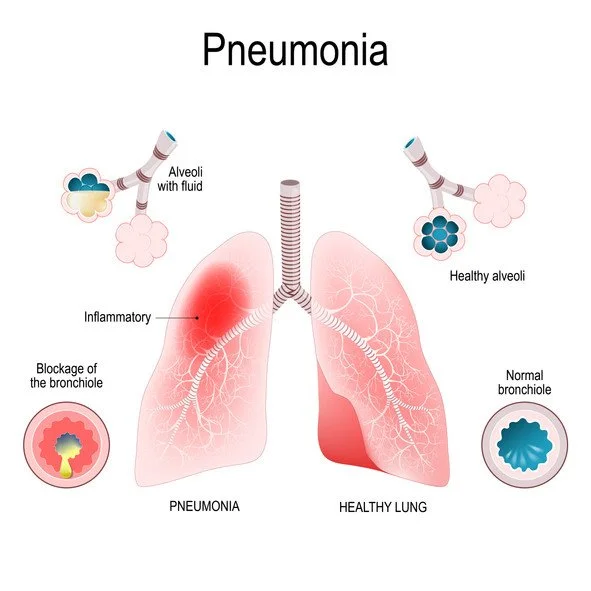
| Category | Pneumonia |
Pneumonia is an infection of the lungs that can cause mild to severe illness in people of all ages. Signs of pneumonia can include coughing, fever, fatigue, nausea, vomiting, rapid breathing or shortness of breath, chills, or chest pain. Certain people are more likely to become ill with pneumonia. This includes adults 65 years of age or older and children younger than 5 years of age. People up through 64 years of age who have underlying medical conditions (like diabetes or HIV/AIDS) and people 19 through 64 who smoke cigarettes or have asthma are also at increased risk for getting pneumonia.
Causes of Pneumonia
Encourage friends and loved ones with certain health conditions, like diabetes and asthma, to get vaccinated against the flu and bacterial pneumonia.
When bacteria, viruses or, rarely, fungi living in your nose, mouth, sinuses, or the environment spread to your lungs, you can develop pneumonia or other infections. You can catch the bacteria or viruses from people who are infected with them, whether they are sick or not.
Types of Pneumonia
Pneumonia developed during or following a stay in a healthcare facility (like hospitals, long-term care facilities, and dialysis centers) is called healthcare-associated pneumonia (HCAP), which includes hospital-acquired pneumonia (HAP) and ventilator-associated pneumonia (VAP).
Signs and Symptoms of Pneumonia may include:
• Chest pain when you breathe or cough
• Confusion or changes in mental awareness (in adults age 65 and older)
• Cough, which may produce phlegm
• Fatigue
• Fever, sweating and shaking chills
• Lower than normal body temperature (in adults older than age 65 and people with weak immune systems)
• Nausea, vomiting or diarrhea
• Shortness of breath
Risk factors of Pneumonia Include:
• Being hospitalized: You're at greater risk of pneumonia if you're in a hospital intensive care unit, especially if you're on a machine that helps you breathe (a ventilator).
• Chronic disease: You're more likely to get pneumonia if you have asthma, chronic obstructive pulmonary disease (COPD) or heart disease.
• Smoking: Smoking damages your body's natural defenses against the bacteria and viruses that cause pneumonia.
• eakened or suppressed immune system: People who have HIV/AIDS, who've had an organ transplant, or who receive chemotherapy or long-term steroids are at risk.
PLEURAL DISORDER
The pleural is the membrane that lines the thoracic (chest) cavity and covers the lungs. It is like a large sheet of tissue that wraps around the outside of the lungs and lines the inside of the chest cavity. The chest (thoracic or pleural) cavity is a space that is enclosed by the spine, ribs, and sternum (breast bone) and is separated from the abdomen by the diaphragm.
TYPES OF PLEURAL DISEASES :
• Hemothorax: Accumulation of blood in the pleural cavity.
• Pleural effusion: Accumulation of excess fluid in the pleural cavity; this accumulation pushes against the lung and prevents full expansion with breathing.
• Empyema: The accumulation of pus in the pleural cavity. This is a type of pleural effusion that is usually associated with pneumonia (an infection in the adjacent lung).
• Pleural tumors: Malignant tumours arising from the pleura (e.g. mesothelioma) or spreading to the pleura (metastatic) from another site, and benign tumours arising from the pleura
• Pneumothorax: Accumulation of air within the pleural cavity between the outside of the lung and the inside of the rib cage.
SYMPTOMS OF PLEURAL DISORDERS
• Shortness of breath
• A cough
• Fever and chills
• Rapid, shallow breathing
• Unexplained weight loss
• Sore throat that is followed by joint swelling and soreness
CAUSES OF PLEURAL DISORDERS
• Viral, bacterial, and fungal infections
• Lung cancer
• Other lung diseases, such as sarcoidosis, asbestosis, and mesothelioma
• Pulmonary embolism
• Familial Mediterranean fever
• Parasites
• Heart surgery
• Chest injury (trauma)
• Reaction to certain medications


